
Tom Shoemaker
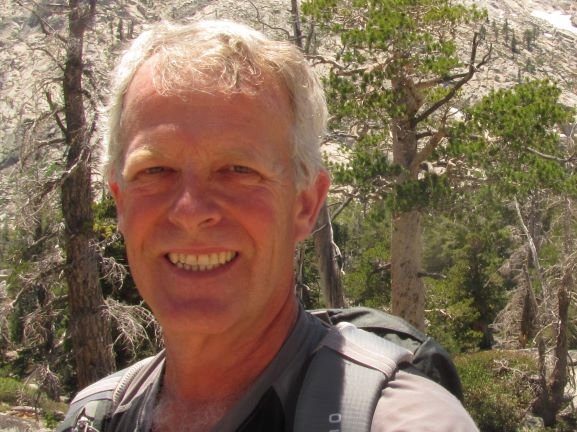
As Director of the Natural Resources Department for the City of Fort Collins, Tom Shoemaker helped build early partnerships that shaped Larimer County’s open space conservation. Serving on the first Open Lands Advisory Board, he helped guide efforts that protected thousands of acres between Fort Collins and Loveland.
When and how did you first become involved with the Larimer County Department of Natural Resources, and what role did you play in advancing our open space efforts?
At the time, in the early 1990’s, I was the Director of the Natural Resources Department for the City of Fort Collins. We had just launched our Natural Areas Plan, adopted a city sales tax, and were negotiating our first land conservation projects. A critical aspect of these early efforts was collaboration with Larimer County DNR, City of Loveland, State agencies, non-profits, and others to establish partnerships for planning and implementing open space conservation programs. Jointly, we forged relationships that continue today to coordinate efforts, share best practices, and make the best use of HPOS and other public resources.
1996 Open Lands Board and Staff
When the HPOS sales tax was approved, the Larimer County Open Lands Advisory Board was established to guide implementation. I represented the City of Fort Collins on the first Board, from 1995 to 2001. During this early time, the Board focused on strategic planning, setting priorities, and establishing operating procedures.
Between 2001 and 2018, I was not actively involved with DNR programs, except as an avid hiker, cyclist, and nature enthusiast who loves the conserved open lands protected through the HPOS program. In 2019, I rejoined the OLAB until 2025. I have been fortunate to participate at the very beginning of the HPOS program and in the present, 30 years later.
From your perspective, what is one of the most meaningful outcomes or accomplishments that the Help Preserve Open Spaces (HPOS) sales tax has made possible?
The HPOS sales tax has made it possible for all of Larimer County to participate, to think big, and to plan for the long-term. The revenue-sharing provisions of the HPOS tax (with extensions) established decades-long funding for the county, and separately, for each community. This allowed every community to be involved. Communities could set and pursue their own priorities, and they could partner to implement larger, joint projects. Because the HPOS tax (with extensions) had a long-time horizon, conservation efforts could be phased. This was critical because it allowed a culture of trust to emerge and relationships with landowners to develop over time.
Throughout the life of the HPOS tax, there have been many, many positive accomplishments. One early example was the multi-year effort by Larimer County, Loveland, and Fort Collins to conserve open space to maintain a “community separator” between the two cities. In past years, there had been much discussion of the benefits of maintaining an open corridor between the two communities, but no clear vision or implementation plan had been adopted. Meanwhile, there was increasing likelihood of new development in the corridor.
Approval of the HPOS tax measure made it realistic to believe that open lands could be conserved in the Loveland—Fort Collins corridor to help maintain community identity, and to protect valuable wetlands and wildlife habitats, agricultural lands, and the outstanding viewsheds of the foothills and high mountain. Larimer County, Loveland, and Fort Collins launched new land planning efforts to create the Plan for the Region Between Fort Collins and Loveland, and the Fossil Creek Reservoir Area Plan, which were adopted by the local governments to establish priorities.
These actions spurred coordinated action by the recently established Open Space and Natural Area programs of Larimer County and the two cities. Over the next 30 years, we worked successfully with willing landowners to conserve more than 25 parcels of land, totaling more than 3,500 acres. Conservation specialists employed a variety of tools to achieve conservation goals, including fee-title acquisition, conservation easements, land exchanges, and innovative land development techniques.
Today, these conserved areas are treasured public resources, their names are familiar, and they provide trails and other amenities for access to hiking, biking, bird watching, and other nature-based activities. These conserved lands include: Fossil Creek Reservoir Natural Area, Fossil Creek Wetlands Natural Area, Long View Farm Open Space, Sunset Vista Natural Area, Prairie Ridge Natural Area, Coyote Ridge Natural Area, and several others. Local governments and other partners continue to work closely together to steward these areas as vital elements of the fabric of northern Colorado.
The collaborative team effort in the region between Fort Collins and Loveland is one example of many complex land conservation projects facilitated by the HPOS tax throughout Larimer County. Others include the Cache la Poudre/Big Thompson Rivers Legacy Project and the Laramie Foothills Mountains to Plains Project. Together with significant, “stand-alone” projects such as Canyon Edge Open Space and Hermit Park Open Space, conservation action funded by HPOS continues to provide critical protection for our natural landscapes.
Fort Collins Coloradoan, March 20, 1995
Is there a memory or moment from your time with LCDNR that stands out as especially powerful, either personally or for the community?
Though I had many powerful moments through my open lands and board work, the memories that I most remember are personal experiences while in our open spaces and natural areas. I often hike alone, or with a family member or friend. We hike quietly and are always watching and listening to our surroundings – wanting to know who else is sharing our space in that moment. One day at Red Mountain Open Space, a friend and I were walking down a high ridge where we were even with the tops of adjacent trees. As we came around a bend in the trail, we spotted a Northern Goshawk, perched high on a Douglas fir tree. He gazed at us a few moments. We had a good look. He lifted and glided in a gentle arc before disappearing into the forest across the canyon. This is the only time I have ever seen that species.
Another time I was alone at Prairie Ridge Natural Area. It was a very foggy fall day, with a light breeze moving the mist around. I reached the foothills and sat on a bench to watch and (mostly) listen. The fog was dense and it was very quiet. As I waited for several minutes, a mule deer emerged from the mist only a few yards away. She wasn’t startled by my presence and slowly walked by into the adjacent wheat field. Over the next 15 minutes or so, another dozen deer strolled by, does and their fawns, slowly grazing their way. They moved silently through the fog, coming into view and then instantly disappearing.
These types of encounters in the natural world are widely available throughout Larimer County, thanks in part to the HPOS tax and associated open lands programs. When they occur, I always think that we, residents of Larimer County, have made important, good choices. Our open lands and natural areas protect the wildlife and habitats of vital ecosystems and they allow us unforgettable experiences of the natural world.
How have you seen Larimer County residents, families, or visitors benefit from the protection, restoration, and enjoyment of open spaces?
I am fortunate to be able to frequently visit a wide variety of natural areas and open spaces across Larimer County. This has given me years of unscientific, anecdotal data about the benefits of open space conservation and stewardship. Based on my observations, our open spaces are very popular. Parking lots are busy, trails are well-used but generally not overused. Our open lands are visited by a wide variety of people – hikers, runners, cyclists, walkers, bird-watchers, school groups, fishers, nature journalists, residents, visitors, kids, and elders. Open space visitors are happy, they smile, greet strangers, and sometimes want to chat. They are active and outside. They use open lands for exercise, or for relaxation. Some walk out their doors and access a trail in a natural setting within minutes; others drive from Weld County or Denver because they have heard of our special places. Finally, our residents and visitors care passionately about open lands. They learn about the natural world. They get involved and speak up. They advocate for land conservation. They volunteer their time to build trails and restore native plants. They share their expertise and experience.
The many benefits of open lands conservation and stewardship are individual. They meet different needs for different people and they are meaningful for different reasons. Whatever the meaning, though, they have become part of the fabric of our northern Colorado communities – our landscape and our lifestyle.
What message would you want to share with future generations about why conserving and stewarding lands in Larimer County is important?
I would share that the people of Larimer County have made huge investments in land conservation in perpetuity. Future generations will need to take over this responsibility and make important decisions to maintain healthy ecosystems. To prepare, I would encourage four things.
Explore.
Get to know our open lands. Find places that make you curious or make you feel at home. Learn about our landscapes and our relationships with the land.
Get dirty and tired.
Get involved. Help build a trail or plant native plants. Take long hikes. Sit still, and see what walks or flies by. Build memories.
Think big.
Much has been accomplished, but there is still a lot of work to do.
Think long-term.
Stewardship responsibilities are ongoing and will always require resources. Change is inevitable and will require adaptation.
Fort Collins Coloradoan, August 27, 2002