K-Lynn Cameron
In 1980, K-Lynn Cameron dreamed of an open space program for Larimer County. Commissioners were skeptical. Critics fought it as government overreach. Through persistence and authentic engagement, she and so many others transformed open space from a "dangerous notion" to something as mainstream as the public library.
Written by K-Lynn Cameron
I'd like to share a story about my experience with the beginning of Larimer County's Open Lands Program. As this story unfolded over the early years, we learned lessons that remain relevant for today's partisan times.
Today in 2026, Colorado embraces open space. We have over 40 city and county open space programs and 30+ nonprofit land trusts – all working together to protect the special places of Colorado. Our state lottery even benefits open space and trails.
Has it always been this way? Can you imagine a time when open space was a dangerous notion?
In 1978, I was a young, enthusiastic trail planner working my first real job at Jeffco Open Space. There, I was fortunate to cross paths with Carol Karlin, the visionary behind Jefferson County's open space sales tax. She was inspiring. In 1971, as Karlin watched rapid growth occur in Jeffco on the western edge of the Denver Metro Area, she conceived the idea of buying up large swaths of mountain land to protect it from development using a citizen-approved sales tax. She was a person of action. In 1972, Jeffco citizens approved a sales tax to protect open space in perpetuity.
By 1980, I was back home working in Larimer County's Planning Department. My charge was to develop a strategy to fund land conservation. Carol Karlin was my inspiration. I dreamed of an open space program and dedicated tax just like Jeffco's to protect the special places right here at home in Larimer County. If she could do it, we could do it.
All we needed was a plan of action – a Master Plan to lead the way. Master plans and citizen surveys – that's what you needed to learn what citizens wanted. How hard could that be? So much to learn.
As I discovered, to the County Commissioners in the 1980s, master planning seemed to be a foreign concept or a door not to open. One Commissioner, skeptical of surveying citizens, actually told me, "people might say they want open space and trails!"
How could we convince this reluctant Board of Commissioners to move forward with developing a Master Plan for parks and open space?
Lesson #1: Listen to them and work with what you hear. Go slow to go fast.
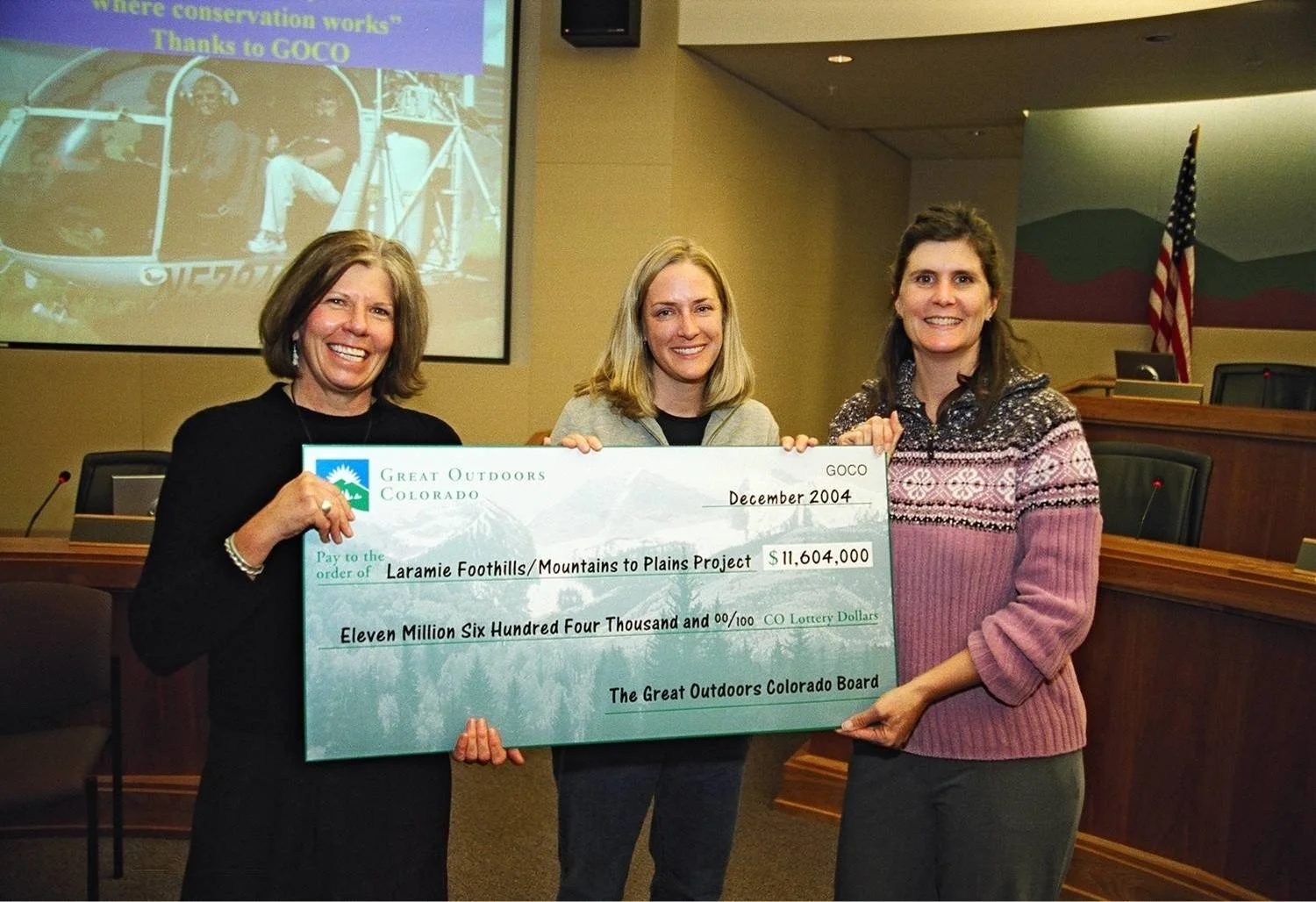
Phase the Master Plan and involve the Board every step of the way—then listen again. The Phase I results weren't surprising, so the Board approved moving to Phase II. Since Phase II didn't seem too demanding and open space needs looked minimal, the Board agreed to complete the final phase. Here's an example: in the first 1993 Parks and Open Space Master Plan, the expansive 55,000-acre Laramie Foothills Mountains to Plains conservation project (which now includes Red Mountain Open Space, Soapstone Natural Area, and Roberts Ranch) appeared as just a small dot in the vastness of northern Larimer County. That tiny dot was a foot in the door—and it counted for a lot.
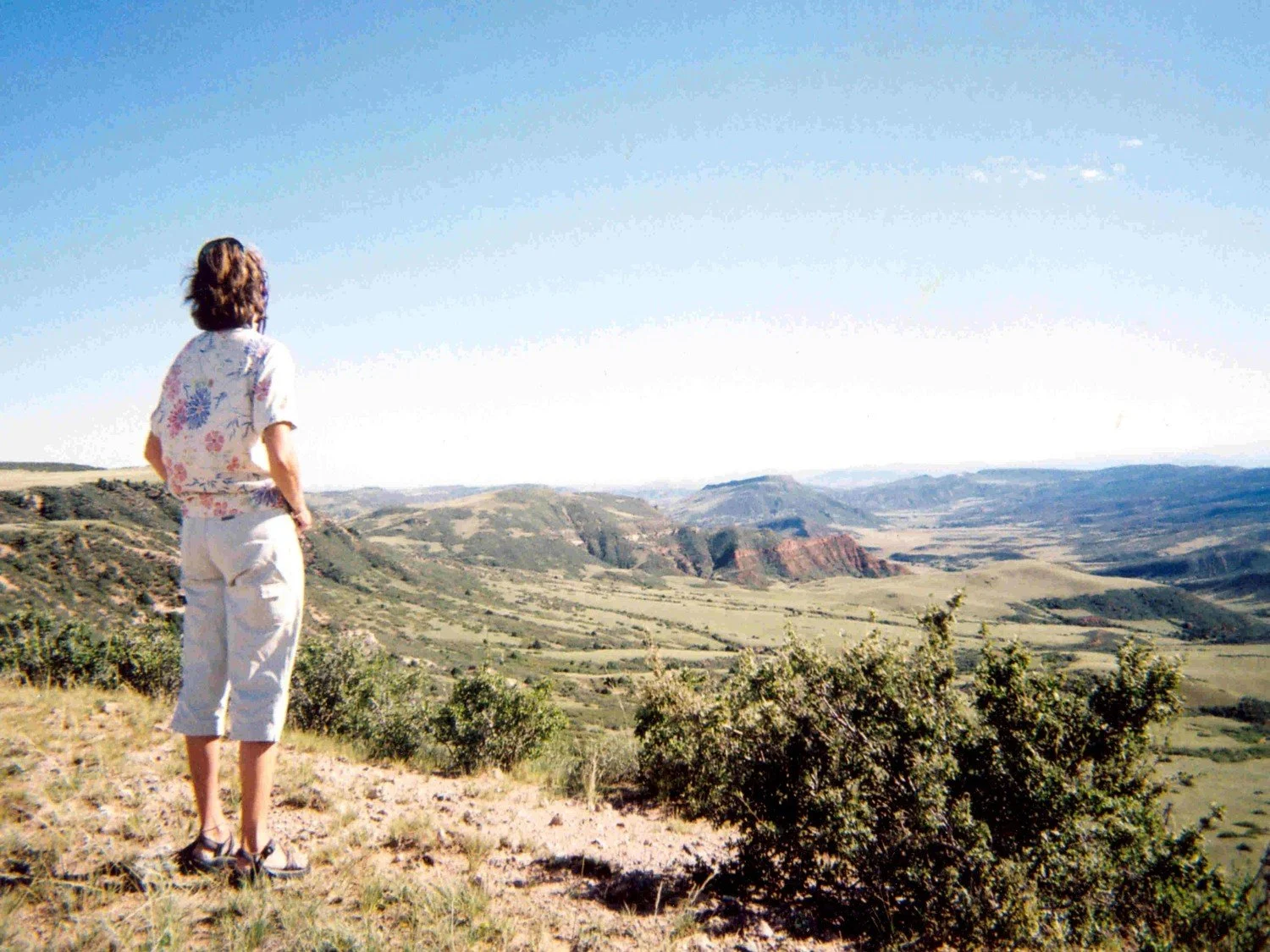
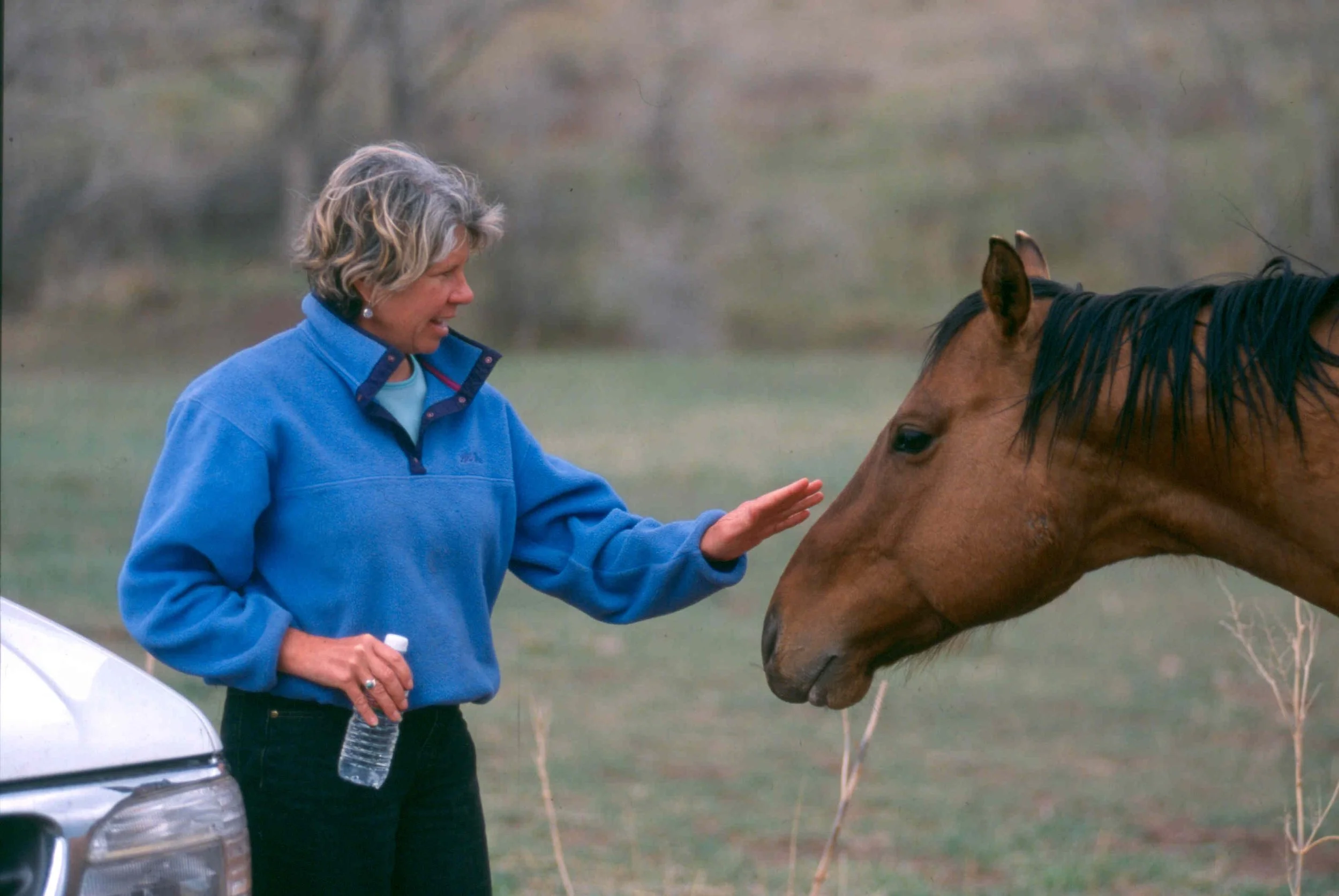
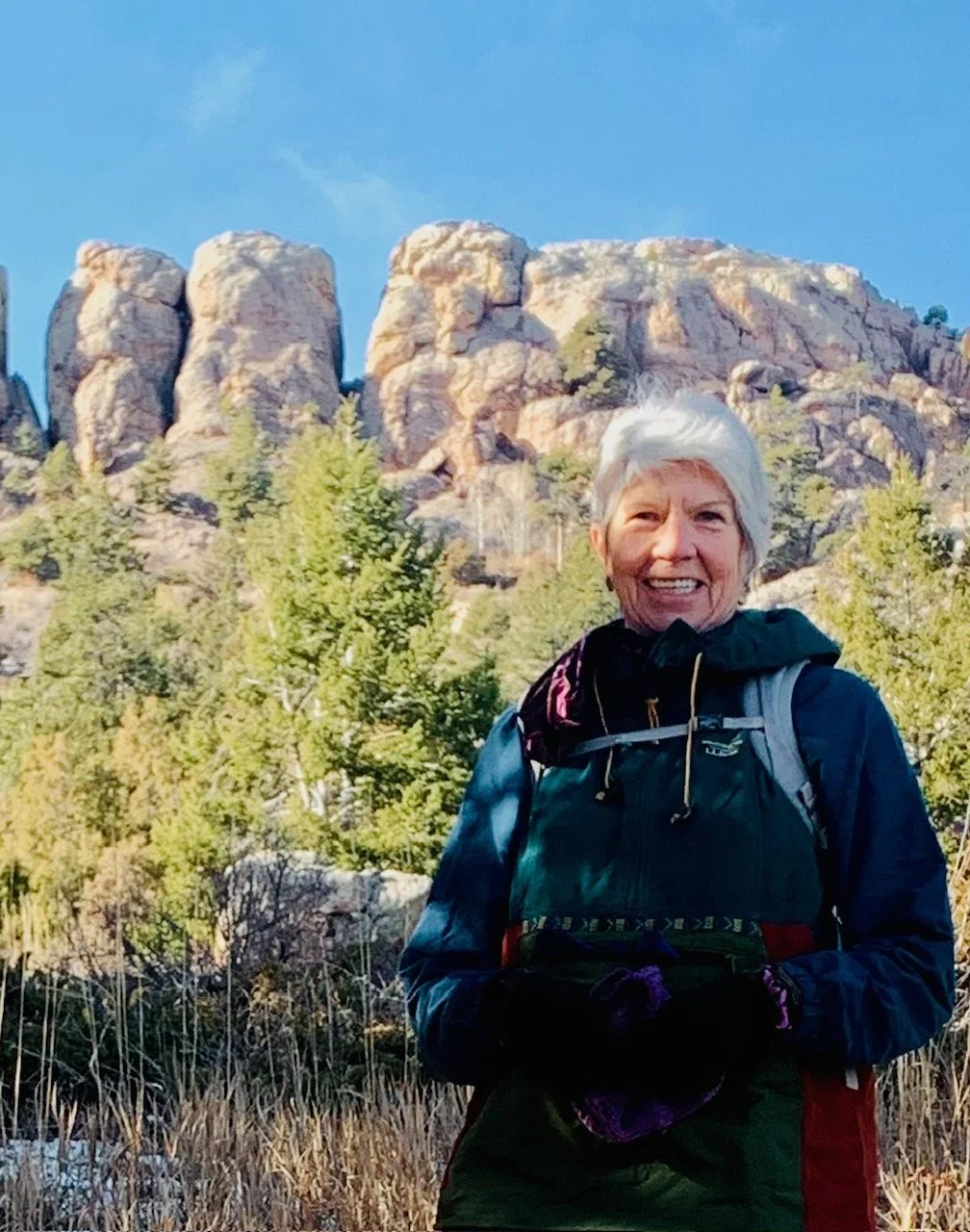
K-Lynn Cameron at Red Mountain Open Space, 2004.
Because we phased the Parks and Open Space Master Plan and took longer to develop it, the clock turned. By 1992, two new County Commissioners supportive of open space had been elected. The Board adopted that first Parks and Open Space Master Plan in 1993.
Once again, can you imagine a time when open space was a dangerous notion in Larimer County?
Well, let me tell you about the CRPPRS. (Yes, they pronounced it "Crappers!") "Citizens for the Recognition of Private Property Rights."
The CRPPRS formed in the early 1990s because that newly elected Board of County Commissioners had grand plans to change how things were done—a little too quickly, as it turned out. The Board proposed a Design Review Overlay Zone—a zone restricting how, when, and if you could build houses in the foothills on top of ridgelines. In early 1990s Larimer County, these were fighting words: government taking private property rights. After a hard-fought battle, the CRPPRS won and succeeded in derailing the Design Review Overlay Zone.
With that victory, the CRPPRS became an effective and well-funded watchdog group fighting anything they felt infringed on private property rights. That proved unfortunate for a fledgling grassroots group of passionate citizens organizing for the first time to protect open space in Larimer County—that would be me, Tom Keith, Kelly Ohlson, Brian Werner, Steve VanderMeer, and others.
Now 1994. A Parks and Open Space Master Plan was adopted, and POST 2001 (Parks, Open Space and Trails)—an open space tax referendum—was on the ballot. That tenacious citizen's group was energetically campaigning to garner support for protecting open space. The time is right, the time is now.
Oh no, those CRPPRS. Still there, stronger than ever, energized by the defeat of the Overlay Zone. They were fighting the open space tax because, to them, it meant government taking their land.
Darn. The time wasn't right—we lost. So devastating to those of us working on a grassroots campaign for the first time. It seemed that all was lost.
Lesson #2: Never give up. Always persist.
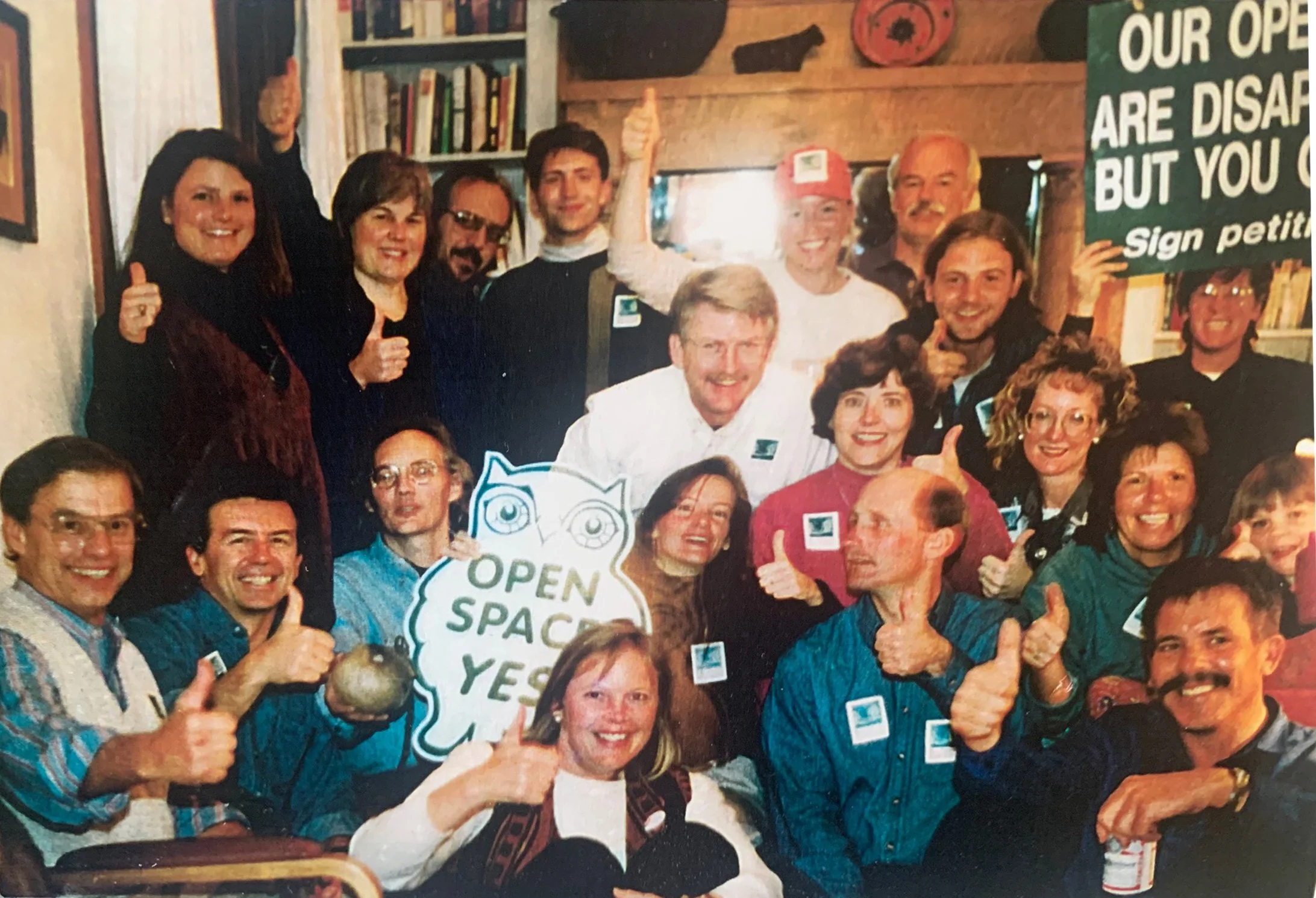
The sun did come up the next day, and we got right back to work. We realized that the 1994 campaign had been important as an education process. Our grassroots campaign—Help Preserve Open Spaces (HPOS)—grew stronger and attracted new countywide members: Linda Stanley, Deni LaRue, Cordelia Stone, Nancy Wallace, Steve Fancher, Mac Juneau, Wendall Amos, Anna Lenahan, Maryann Martell, Bill Neal, Matt Jones, Diana Morton, and so many others. We opted to go with a citizen's initiative because it would get us out in every community, talking to people about what this open space sales tax could mean for the quality of life throughout Larimer County.
And importantly, we reached out to Larimer County cities and towns and the CRPPRS—both were skeptical and critical of the POST 2001 referendum.
Lesson #3: Engage authentically with critics to develop a mutual understanding and build trust and respect.
Listen to everyone even closer and learn from what you hear.
We sat down with the cities and towns, who were concerned that Larimer County would not fairly distribute tax revenues throughout the county. In the new HPOS ballot language, the tax would be shared with the cities and towns, and the advisory board would have four seats appointed by cities. In 1995, all the cities and towns endorsed the HPOS sales tax proposal.
We also sat down with the CRPPRS – we listened and mended fences. We revised the ballot language: buy land only from willing sellers; limit the tax to 7 years; exempt food and prescriptions from the tax; allow the tax to purchase not only land but also water rights. Today, the CRPPRS have long since disbanded, and many of their former members are now our strongest supporters. I have to think it's because we listened and we heard.
Lesson #4: Trust the power of grassroots community building.
One year later, in 1995, 60% of Larimer County voters supported the Help Preserve Open Spaces sales tax in a landslide. Then, in 2014, support grew to an avalanche – 82% of Larimer County voters backed extending the open space tax for 25 years until 2043. I'll be 93!
Today in 2026, Larimer County's Open Lands Program is well established, highly respected, and wildly popular. Thirty long years ago, open space seemed like a dangerous notion. Today, open space protection is as mainstream as the public library. Thanks to you, Larimer County voters, tenacious HPOS campaign workers, supportive County Commissioners, committed Open Lands Advisory Board members, and the amazing, dedicated staff over the years at Larimer County Natural Resources.